What makes a handwritten font right for your holiday greeting card?
A handwritten font for holiday greeting card helps your message feel personal and warm not generic or rushed. When recipients open your card, they notice the rhythm of the letters, the slight slant, the uneven baseline. That’s what signals care, not just convenience.
How is this different from regular script fonts?
Handwritten fonts mimic real pen-on-paper movement: subtle line variation, natural entry/exit strokes, and occasional ink bleed or texture. A formal calligraphy font may look elegant on a wedding invitation, but it often feels too polished for a cozy holiday note. For seasonal greetings, you want something that suggests time taken not perfection.
Which style fits your card’s tone and audience?
If your card goes to older relatives, choose a clean, legible handwritten font with generous spacing like those used in classic wedding stationery, but softened slightly. For kids’ classroom cards, go bouncy and rounded similar to fonts designed for children’s birthday cards. Teachers appreciate warmth without clutter, so consider options used in teacher appreciation notes: friendly, slightly relaxed, but still tidy.
Technical tips for printing and digital use
Test print at actual size. Some handwritten fonts lose charm when scaled down below 14 pt. Avoid heavy shadows or outlines they flatten the hand-drawn effect. Don’t stretch or skew the font; it breaks natural letter proportions. If your design software adds automatic kerning, turn it off handwriting has irregular spacing by nature.
Common mistakes and how to fix them
Using a “cursive” font that’s actually computer-generated script (not handwritten) creates visual dissonance. Another issue: pairing a playful handwritten font with stiff, formal wording (“We cordially invite…”). Match voice to type. Also, avoid overusing all-caps it kills the organic flow. Instead, capitalize only the first word of each line or phrase.
Your quick checklist before sending
- Print a test copy on the same paper stock you’ll use
- Read the message aloud does the font support the tone, or distract from it?
- Check contrast: dark gray or black ink on cream or white paper works best
- Ensure names and dates are spelled correctly handwritten fonts make typos harder to spot
- Limit to one handwritten font per card (no mixing with decorative display fonts)
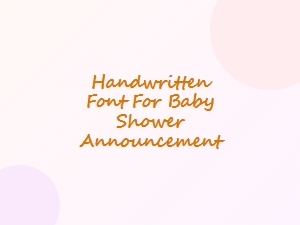 Handwritten Fonts for Baby Shower Announcements
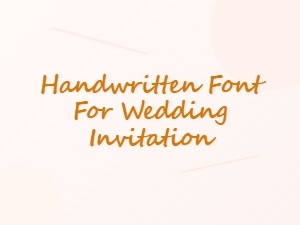 Elegant Handwritten Fonts for Wedding Invitations
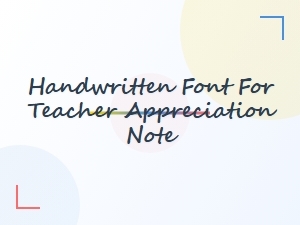 Handwritten Fonts for Teacher Appreciation Notes
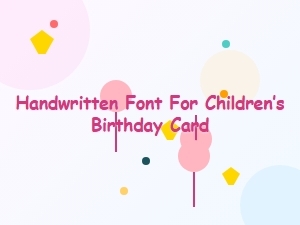 Handwritten Fonts for Children’s Birthday Cards
 Serif Fonts for Vintage-Themed Planners
 Elegant Serif Fonts for Wedding Invitations